Category: Χωρίς κατηγορία

  • Sound-Colour — The Method in Detail

    SOUND-COLOUR OF THE HOROSCOPE

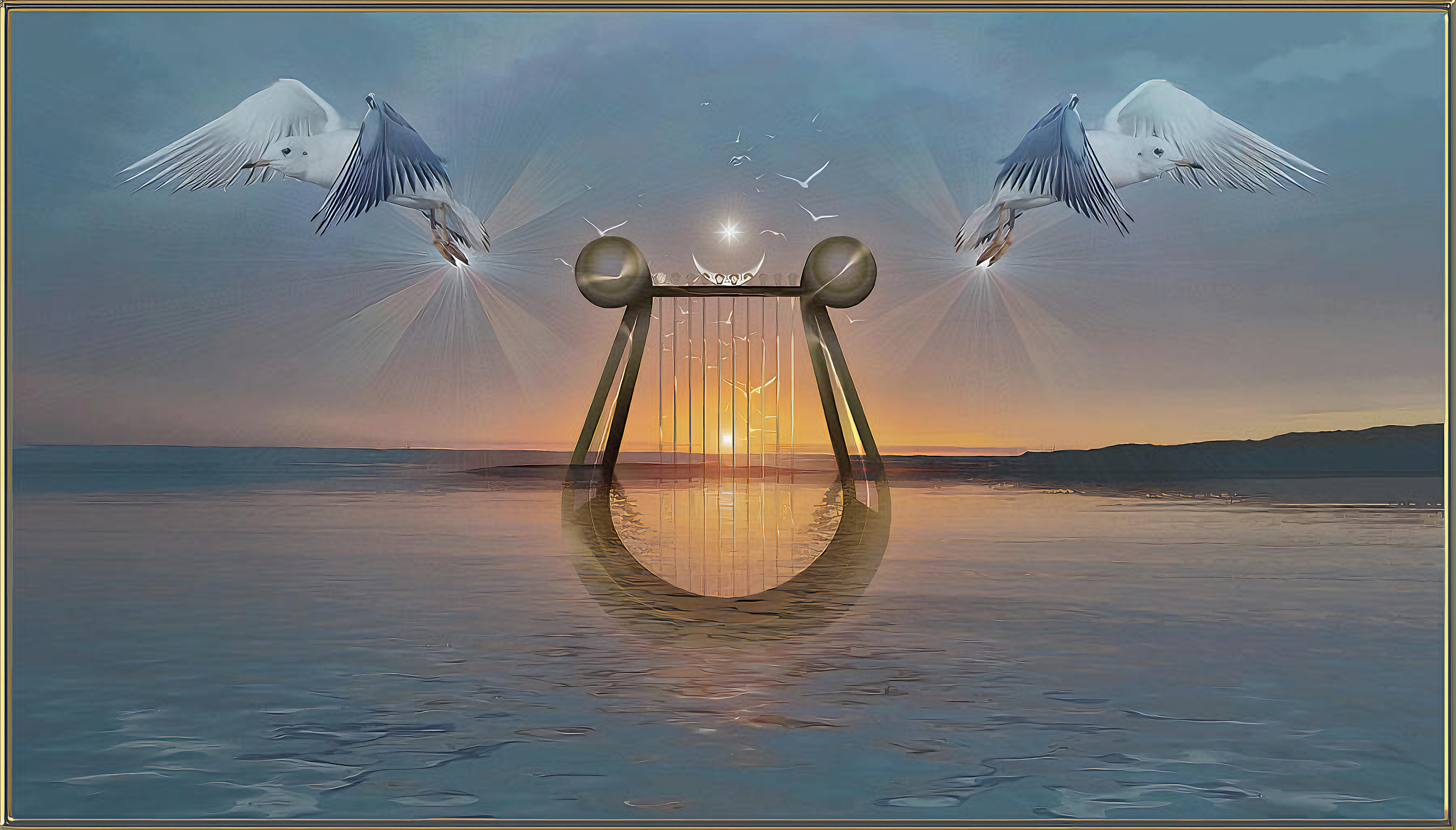
    This creation combines the power of colour therapy and music therapy, in the form of high-resolution video, to offer the viewer-listener a complete and healing experience. Based chiefly on the methods of Petros Graviger, but also on other philosophical works, this work draws upon the principles of psychological and physical renewal through colour and music. P. Graviger, through his work, has contributed to the study of the relationship between the human psyche and the colours, the sounds and the horoscope of each individual, something that is captured in a singular way in this present creation.

    The circle is the symbol of perpetual flow, of rebirth and of balance. If we take the 360 degrees of the circle and convert them into 36 minutes, then each minute represents 10 degrees within a horoscope.

    The colours used in the work are not arbitrary. Each colour corresponds to a specific zodiac sign (month) and exudes specific emotional and psychic vibrations, while the music, with its different frequencies for each month, reinforces the sense of healing and restoration. Every element, from the colours to the sounds, is carefully chosen to create a sense of balance and harmony, contributing to the strengthening of the psyche and to inner serenity.

    In addition, the work includes sounds from the whole cycle of nature and all the seasons of the year. From the song of the birds in spring to the rustling of leaves in autumn, the sounds that compose this sonic creation embrace the countless transformations of the natural and spiritual world. This sonic palette weaves together the dynamics of the planets of each given horoscope with the changes that unfold in the seasons and phases of the year, as well as within us, thus fostering a sense of connection with the natural environment and the recognition of the cycles of life.

    This work advances the idea that art is not merely visual or auditory pleasure, but can also serve as an instrument of healing — the healing of Apollo — and of personal evolution. Through the combined use of colours, sounds and music, the creation invites the viewer or listener to explore their inner world, to connect with their deepest emotional needs, and to attain a state of psychic calm and balance founded on scientific principles.

  • What Is Astrology

    In the horoscope, the human being learns to examine himself, making this instrument a fundamental means of self-knowledge. Through the birth chart, he can recognise matters that concern his very soul, see himself as in a mirror, and perceive his weaknesses, his merits, his abilities, and his sensitive points. This knowledge is addressed chiefly to those who wish to work upon their self-improvement and upon the elevation of their soul; for them, astrology acquires the utmost importance.

    As a natural consequence, the perception of fate is transformed into a favourable and rational path, which the wise reinforce and follow in full awareness of the laws of nature. Then the human being ceases to submit like a slave to the higher forces of nature or to the laws of fate and of the inscrutable. With full awareness, he chooses to tread the shortest road toward elevation and knowledge.

    For pedagogical purposes, the upbringing of our children ought not to be based on empirical rules, which parents follow at random or according to some general and collective pedagogical system. On the contrary, it will rest upon a full awareness of the abilities and the tendencies of the child, which are not always easily discernible from earliest childhood.

    Individualised upbringing will not be confined to addressing a fault only once it appears or begins to become troublesome. On the contrary, it will begin from the moment when, by studying the horoscope of the child, we are able to identify his weak sides and to strengthen his forces, even from the first days of his life.

    In the same manner, the true inclinations and talents of the child, which will determine his course at school and later the choice of his profession, can be detected through the horoscope. Later, by comparing the horoscope of the child with those of the other persons in his surroundings, it will be possible to discover which person would be the most suitable for marriage.

    In the domain of justice as well, astrology can contribute to the recognition of criminal types and to the determination of the degree of responsibility and culpability that we may attribute to a person. Moreover, in cases of the missing, it becomes possible to estimate the circumstances of their death or the nature of the accident.

    In the domain of art, astrology permits us to discover geniuses and to direct their development with prudence. At the same time, it can temper the arrogance of certain artists, who perhaps ought to choose another profession, so that they may not be led astray from their true vocation.

    In philosophy, astrology renders possible the finding of a way out amid the spiritual anarchy of our times. It reveals a world utterly ordered, brings to light the inner relation and the solidarity of all beings, and breathes new life-force into the sacred mysteries and the most ancient symbols. It shows the human being that he is not only his material body, which obeys the laws of the universe, but that his soul too lives under the influence of cosmic forces and laws, which for the most part remain unknown.

    In medicine and therapeutics, astrology constitutes one of its most significant applications. Our horoscope informs us of the constitution of each individual, and thus we are able to recognise in advance possible predispositions to illnesses. It permits the observation of the organs of the body that require particular care, as well as of the eventual measures that the physician must take into account.

    Furthermore, the horoscope affords the possibility of selecting remedies and therapeutic methods specially adapted to the patient, something that today is often neglected. Modern official medicine has reached the extremes of a general and impersonal mode of action, where medicines do not take into account the particularities of each organism. The disadvantages of this mode are by now evident.

    Astrology, on the contrary, demonstrates that a remedy, in order to possess truly therapeutic value, must be administered according to specific rules and laws, and above all must be adapted to the particular individual qualities of the patient. This is achieved through the study of his horoscope.

  • Heimarmene — Fate in Ancient Thought

    .

    HEIMARMENE (FATE)

    (or the Fateful) – "Fate, Will and Power, says Eliphas Levi, are the magical triangle which, in human affairs, corresponds to the divine triangle.

    *Fate, or the Fateful, is the inevitable sequence of causes leading to their effects, in accordance with a certain fixed order. Will is the guiding faculty of the rational powers toward the reconciliation of the freedom of individuals with the necessity of things. Power is the prudent employment of the will, which compels even the Fateful itself to serve the fulfilment of the desires of the wise man."

    In the Pythagorean right-angled triangle, Fate is represented by the hypotenuse, while the two perpendicular sides represent Providence and Will. From this it follows that the human will cannot match the power of Fate, except only with the aid of divine Providence. On this basis a most interesting study may be made, both theoretical and practical, concerning the manner in which the force of the fateful may be diminished and consequently evil abolished — that evil of which the Fateful is the apparent cause and yet, in reality, the fated resultant. It follows that, if I place my hand upon the fire I shall be burned; the "evil" of the burn (pain) is an application of the fateful. Insofar as I remain ignorant, I am subject to Necessity and to Fate; I must therefore seek a means by which I may become stronger than the fateful. I possess a power whose force, suitably cultivated, may become significant: this is the will. If I were to train and develop this power, if I were to "dynamize" it, if I were to render it invincible and all-powerful (mysteries), like that of God, I should surely succeed in conquering the Fateful, in subjugating it, in chaining it. Thus reasons the adherent of "dianoetic" magic — and thus, more or less, the criminal also thinks."

    Trismegistus, in the dialogue "Asclepius", provides the solution to the problem of Fate: "That which we call Fate is that Necessity which presides over the course of all events, binding them together with a continuous chain… Fate and Necessity are inseparably bound together by a kind of unbreakable bond. Fate comes first, which carries within it the beginning of all things, while Necessity comes to bring definitively and inevitably to their end all that Fate has begun. Both have as their consequence Order — that is, the harmonious arrangement and the temporal succession of everything that must come to pass. For nothing escapes the regulation of Order, and thus this beautiful Cosmos is brought into being." "To attribute our injustices and misdeeds to Fate is as though we made ourselves good and the gods evil — unless by this we mean to say that the Cosmos, considered as a whole and according to nature, inclines toward evil in all that comes to be. But a faulty upbringing and a weak nature turn the advantages that come from Fate into evil, as happens, for example, with the sun, which, although it is beneficent, is harmful to those suffering from ophthalmia and to those in fever." (Sallustius, On the Gods and the World 20). (Cf. Power, Necessity, Will, the Fateful, Providence). Bibliography. Guenon, Gr, Triade 142. Barlot, Occult. 55) Allendy 151. Levi, Dogma, 60. Voile d'Is. s No 38, 94. Leisegang, Gnosis 363, 376, 385. Papus, Magie 87.

    The Fateful

    The fateful is the binding of causes with their effects — predetermined events that cannot be altered through the will or the effort of man.

    Theosophy accepts that Karma entails inevitable consequences. Yet when consciousness is raised toward the higher (heavenly), formless realms, then causality (the law of cause and effect) ceases to affect it, and the individual is freed from the fateful.

    In other words, the Fateful is a form of causality that operates only on the lower, material or formal levels. The purpose of the initiatory training of the initiate is to be freed from the bonds of these lower realms and to be raised toward the formless and spiritual levels.

    When this happens, the «Wheel of Fate» no longer finds any point of attachment upon the initiate; he acts freely, without being affected by destiny.

    Marsilio Ficino (1433–1499) was an Italian philosopher

    The divinatory sciences —astrology in particular— demonstrate, on the basis of facts, the existence of a clear causality (determinisme). We must accept that this causality is due to various karmic bonds, formed in previous existences (that is, by Karma or Fate).

    Trismegistus, in the dialogue Asclepius, gives the solution to the problem of Fate (Destiny):

    «That which we call Fate is that Necessity which governs the course of all events, binding them together with an unceasing chain.

    Fate and Necessity are inseparably bound to one another by an unbreakable bond.

    Fate comes first — that which carries within it the beginning of all things.

    Necessity comes afterward, to lead definitively and inevitably to their end all that Fate has begun.

    Both have as their result Order, that is, the harmonious arrangement and the temporal succession of every thing that must come to pass.

    For nothing escapes the regulation of this Order, and thus this wondrous, harmonious Cosmos is brought into being.»

    (Asclepius, 1,228)

    Sallustius, in the work On the Gods and the World (20), adds on this matter:

    «To attribute our injustices and failings to Fate is as though we made ourselves good and the gods evil —unless by this we mean to say that the Cosmos, as a whole and according to nature, is led toward evil.

    Yet a faulty upbringing and a feeble nature can turn into evil those things which come from Fate as goods —as happens, for example, with the sun: although it is beneficent, it becomes harmful to those who suffer from ophthalmia or who are in fever.»

    Fate, according to the Hermetic teaching, is the power that gives birth to the beginning of all things, while Necessity is that which leads them to their end — and together they create the universal Order. However, the responsibility for evil belongs not to Fate but to man himself, who, through his weakness or his evil nature, distorts the good into evil.

    -The purpose of providence is the perfection of all beings; the means it uses for this purpose is what is called time